Want to be in the loop?
subscribe to
our notification
Business News
VIETNAM SETS MINIMUM EQUITY REQUIREMENTS FOR FOREIGN OFFSHORE WIND INVESTORS
The Vietnamese government has issued Decree No. 272, providing detailed guidance for the implementation of the National Assembly’s Resolution No. 253 on special mechanisms and policies to support national energy development during the 2026-30 period, introducing financial and ownership requirements to both domestic and foreign investors seeking to develop offshore wind power projects.
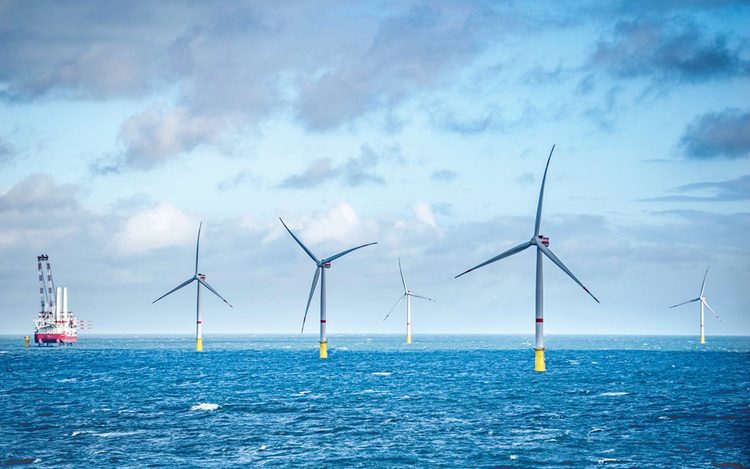
An offshore wind power project in Vietnam. Photo: Tuoi Tre
Under the decree, foreign investors and foreign-invested enterprises must hold a minimum 15-percent equity stake in an offshore wind power project that they will develop.
These offshore wind projects will sell electricity to the national grid under the national power development plan and are scheduled to begin operations during the 2025-30 or 2031-35 periods.
Also, developers are required to contribute equity equivalent to at least 20 percent of the project’s total investment capital.
In addition, investors must secure loan commitments from banks or other credit institutions to finance the remaining capital needed for the project.
The decree also requires foreign investors to ensure the participation of Vietnamese companies.
Domestic enterprises must collectively hold at least five percent of the charter capital or voting shares in the project company.
Foreign-invested developers must be further committed to using domestic labor, goods, and services during the investment, construction, and operational phases of offshore wind projects, provided that local suppliers meet requirements on price competitiveness, quality, project schedules, and availability.
For wholly Vietnamese-owned companies, they must contribute at least five percent equity to an offshore wind power project.
The decree took effect on July 4 and will remain in force until December 31, 2030.
Survey requirements for offshore wind projects
Decree No. 272 also introduces financial requirements for companies conducting offshore wind project surveys.
Survey contractors must have a minimum equity of VND1 billion (US$38,020) for every megawatt (MW) of offshore wind capacity.
Companies applying to survey multiple offshore wind projects must demonstrate sufficient equity based on the combined generating capacity of all proposed projects.
Survey firms are also required to commit that they will not seek reimbursement of survey costs under any circumstances.
The only exception applies to state-owned enterprises that have been officially assigned survey tasks by competent authorities.
To demonstrate financial capability, survey companies must submit audited financial statements for the two most recent years, financial support commitments from parent companies where applicable, or other documents proving adequate financial resources.
The decree further stipulates that survey costs and expenses related to preparing investment approval dossiers for projects surveyed by wholly state-owned enterprises under the Electricity Law for subsequent investor bidding must be audited before implementation.
Source: Tuổi Trẻ News
Related News

INFRASTRUCTURE / CONSTRUCTION / LOGISTIC / PORT
VIỆT NAM-CAMBODIA TRADE GATHERS PACE TOWARDS $20 BILLION TARGET
Trade between Việt Nam and Cambodia continues to grow, remaining a bright spot and a key pillar of bilateral cooperation as the two countries aim to raise two-way trade to US$20 billion in the coming years. After setting a record of more than $11.3 billion last year, bilateral trade reached about $8.7 billion in the first eight months of this year, up 8.3 per cent year on year.
TECHNOLOGY
AI BEGINNING TO RESHAPE RECRUITMENT CRITERIA
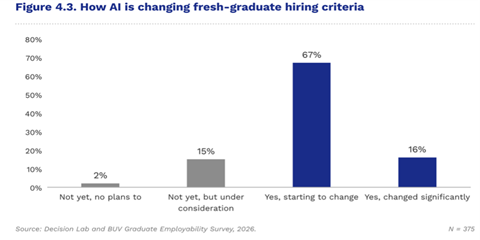
Digital literacy is the only capability area in which fresh graduates meet employers’ expectations, according to a new report. Yet, it is also the standard rising fastest, as businesses increasingly expect new hires to use AI effectively in the workplace. Some 83 per cent of employers say AI has changed, or is beginning to change, their hiring criteria, while 94 per cent report higher expectations for digital and AI capabilities than they had two to three years ago.

INFRASTRUCTURE / CONSTRUCTION / LOGISTIC / PORT
ĐÀ NẴNG GREEN-LIGHTS US$105 MILLION THAI DEVELOPMENT DEAL
The central city has approved an investment proposal by Thailand’s WHA Group to develop infrastructure for the 400ha WHA Đà Nẵng Industrial Park project on two communes of Thăng Bình and Đồng Dương, with an investment of more than VNĐ2.7 trillion (US$105 million). The city said it approved WHA Industrial Development International's status as an investor in the project, which is expected to take place between 2027 and 2034.

VIETNAM ECONOMY INVESTMENT
MOBILE PHONE EXPORTS RISE 20% TO $51.8 BILLION IN FIRST NINE MONTHS
Exports of mobile phones and components rose 20 per cent year-on-year to nearly US$51.8 billion in the first nine months of 2026, with China, the US and Republic of Korea accounting for more than half of the total. Shipments to the three markets reached a combined $26.18 billion, or 50.6 per cent of total exports of the product group during the period, according to data from the Vietnam Department of Customs under the Ministry of Finance.

VIETNAM ECONOMY INVESTMENT
FRUIT AND VEGETABLE EXPORTS POISED TO HIT $10 BILLION IN 2026
Fruit and vegetable exports are on track to reach nearly US$10 billion in 2026, after rising 19.9 per cent year on year to nearly US$7.4 billion in the first nine months, driven by strong seasonal demand and abundant tropical fruit supplies. The Ministry of Agriculture and Environment said the growth reflected stronger international demand for fresh produce and processed agricultural products.
GARMENT / TEXTILE
TEXTILE EXPORTS FACE DUAL CHALLENGES OF SUSTAINING ORDERS AND BOOSTING EFFICIENCY AMID GROWING COMPETITION
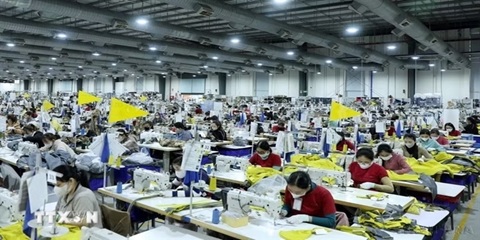
Data shows that the textile and garment sector maintained its growth momentum in the first nine months of this year. The industry's total export turnover reached an estimated US$35.721 billion in the first nine months of this year, up 3.3 per cent year-on-year. Despite posting encouraging export figures, Vietnamese textile and garment enterprises continue to navigate unpredictable market variables.
Events Sponsors






















