Want to be in the loop?
subscribe to
our notification
Business News
VIETNAM TO REQUIRE HEALTH DECLARATIONS FOR ALL CROSS-BORDER TRAVELERS FROM JULY 1
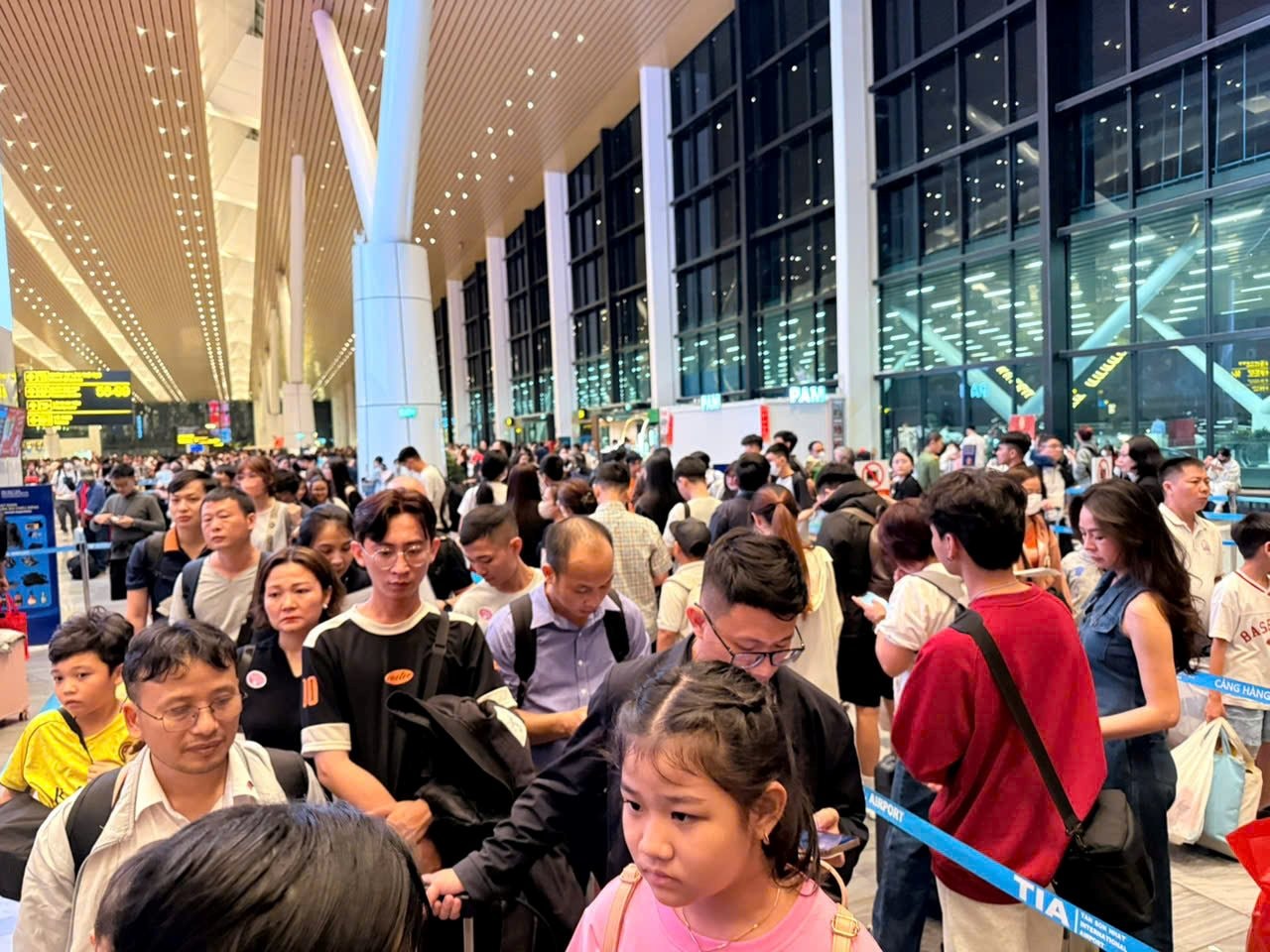
People entering, leaving or transiting through Vietnamese border gates will be required to submit health declarations from July 1 - PHOTO: ARCHIVES
HCMC – People entering, leaving or transiting through Vietnamese border gates will be required to submit health declarations under Government Decree No. 165/2026/ND-CP, which will take effect on July 1, 2026.
The decree was issued to provide detailed regulations and guidance for the implementation of several provisions of the Law on Disease Prevention, including health quarantine requirements for inbound, outbound and transit travelers, the Vietnam News Agency reported.
Under the regulation, inbound, outbound and transit travelers must complete health declarations either electronically or on paper using forms issued by the Ministry of Health.
Those making health declarations must provide proof of vaccination and evidence of preventive measures taken when requested by the Ministry of Health.
Health declarations will be available in both Vietnamese and English. Depending on the global disease situation, additional languages may also be used at border gates.
The decree states that health declarations must be completed within seven days before entry, exit or transit through Vietnamese border gates.
The minister of health will issue guidance on the subjects and duration of health declaration requirements at border gates for each infectious disease, based on the global disease situation and the risk of transmission into Vietnam at different times.
Regarding quarantine procedures, health quarantine officers will conduct direct and indirect observation and monitor travelers’ health conditions and body temperature using medical surveillance equipment to detect suspected infectious disease cases.
When a suspected case is identified, quarantine officers will carry out on-site inspections, including interviews, collection of epidemiological information, review of preventive measures already taken, and checks for signs and symptoms of infectious diseases.
If a person is found to require medical measures under the Law on Disease Prevention, health quarantine officers will carry out the necessary medical procedures.
Under the decree, the maximum time allowed to complete an on-site inspection for one individual is two hours.
Vietnam’s Law on Disease Prevention will take effect on July 1, 2026. Under Article 20 of the law, subjects subject to health quarantine include inbound, outbound and transit travelers, means of transport, goods, corpses, remains, ashes, biological specimens, tissues and human body parts transported across Vietnam’s borders.
Source: The Saigon Times
Related News

BANKING / FINANCE / INSURANCE / TAX
REMITTANCES TO HCM CITY RISE NEARLY 40% IN Q3
Remittances to HCM City reached more than US$2.83 billion in the third quarter of this year, up 39.5 per cent from the previous quarter and 3.6 per cent year-on-year. This was the first quarter showing positive annual growth this year, helping narrow the decline in remittance inflows over the first nine months. According to the State Bank of Vietnam (SBV)’s Regional Branch 2, remittances transferred to HCM City through credit institutions and economic organisations totalled $2.835 billion in Q3, an increase of more than $802 million from the previous quarter.

TECHNOLOGY
TECH SECTOR GROWTH OPENS UP OPPORTUNITIES FOR VIỆT NAM TO GO GLOBAL
The growth of the electronics, semiconductor and high-tech sectors worldwide is opening up a variety of opportunities for Vietnamese enterprises to integrate more deeply into the global supply chain. However, to become suppliers for these corporations, domestic enterprises must meet rigorous standards regarding quality, technology, productivity and order fulfilment capabilities.
VIETNAM ECONOMY INVESTMENT
FOREIGN INVESTORS SEEKING A SYNCHRONISED MANUFACTURING ECOSYSTEM
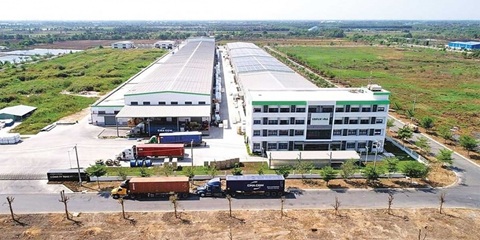
Instead of focusing only on land costs and incentives as usual, foreign investors are seeking a synchronised manufacturing ecosystem, from stable power supply and logistics to shared infrastructure and the convenience of completing residence procedures for experts to serve their long-term investment in the country.
MEMBER CORNER / PROMOTIONS
SENTRYSAFE FHW40200 – PROTECT YOUR VALUABLES, ENJOY PEACE OF MIND!
Looking for a reliable solution to protect your important documents, cash, and valuables from fire and water damage? Genuine SENTRYSAFE - Reliable protection for your valuables and peace of mind! Contact Sen Wai Vietnam for more information and personalized product recommendations.
PROPERTY / INDUSTRIAL ZONE
HCM CITY ATTRACTS US$5.7 BILLION INTO EXPORT PROCESSING AND INDUSTRIAL ZONES
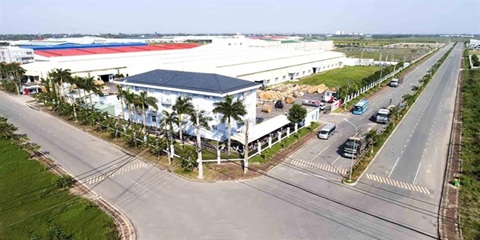
HCM City attracted US$5.7 billion in domestic and foreign investment into its export processing and industrial zones during the first nine months of 2026. The figure exceeded the city's full-year target by 31 per cent, highlighting strong momentum in high-quality industrial investment under Resolution No.10-NQ/TW. Total investment reached 131 per cent of the 2026 target of $4.25 billion and represented a 29 per cent increase compared with the same period in 2025, according to the city's Export Processing and Industrial Zones Authority (HEPZA).
INFRASTRUCTURE / CONSTRUCTION / LOGISTIC / PORT
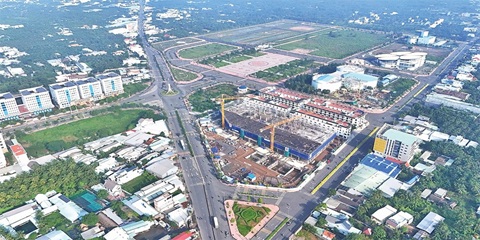
DONG THAP PROVINCE STEPS UP INDUSTRIAL EXPANSION AND INFRASTRUCTURE CONNECTIVITY
Accelerating public investment, strengthening inter-regional connectivity, and expanding industrial land are helping Dong Thap efficiently bolster competitiveness and drive economic growth. Following the 2025 merger of the former Dong Thap and Tien Giang provinces, the expanded Dong Thap province in the Mekong Delta faces mounting pressure to accelerate infrastructure development and strengthen connectivity among local economic zones, urban areas, industrial parks (IPs), and production centres.
Events Sponsors






















