Want to be in the loop?
subscribe to
our notification
Business News
VIETNAMESE FIRMS STEPPING UP AMID US TARIFF CHALLENGES
The majority of Vietnamese businesses expect intra-ASEAN trade to grow following the announcement of US tariffs, according to the 2025 UOB (United Overseas Bank) Business Outlook Study released on June 25.

Following the US announcement of 46 per cent reciprocal tariffs in April, Vietnamese businesses have been taking steps to manage the impact. Despite the uncertainty, 60 per cent of firms remain optimistic about the year ahead, and 46 per cent plan to accelerate overseas expansion, according to the study.
The 90-day pause by the US government has allowed time for trade negotiations, enabling companies to act swiftly to stabilise supply chains and control rising costs. About 52 per cent expect significant increases in raw material and production costs, while 30 per cent anticipate higher inflation. To cope, businesses are diversifying suppliers, boosting localisation, and reducing reliance on the US market. Nearly 70 per cent foresee growth in intra-ASEAN trade, highlighting the region’s rising importance.
In addition, firms are doubling down on digitalisation and sustainability as key strategic pillars. 61 per cent and 56 per cent of Vietnamese businesses, respectively, plan to step up their efforts in these areas. While digitalisation is expected to enhance operational efficiency and improve customer experience, adopting sustainability practices can help businesses attract investors and strengthen their corporate reputation, factors that are increasingly important in navigating the uncertainties brought about by the US tariffs.
Beyond self-driven initiatives, businesses in Vietnam are also seeking support from the government and financial institutions to tide them over the current challenges. In the near term, financial assistance remains a critical need – 73 per cent of firms are looking for financial relief to cushion the impact of the tariffs, while 65 per cent hope for targeted subsidies or tax exemptions for the most affected sectors.
From a strategic standpoint, businesses are also calling for longer-term support, including bilateral trade agreements with key markets and assistance with supply chain relocation. These were cited by 62 per cent of the study's respondents.
Lim Dyi Chang, head of Commercial Banking at UOB Vietnam, expressed confidence in Vietnam’s economic prospects, despite recent concerns over tariff-related uncertainties.
"The country’s sound fundamentals, recent policy reforms and the swift actions taken by the business community are encouraging. These developments also present an opportunity for Vietnamese firms to recalibrate their strategies – to reduce over-reliance on individual export markets and to tap into the growing strength of intra-ASEAN trade. As highlighted in our Business Outlook Study, strategic adaptability will be a key differentiator for enterprises in this evolving landscape," he said.
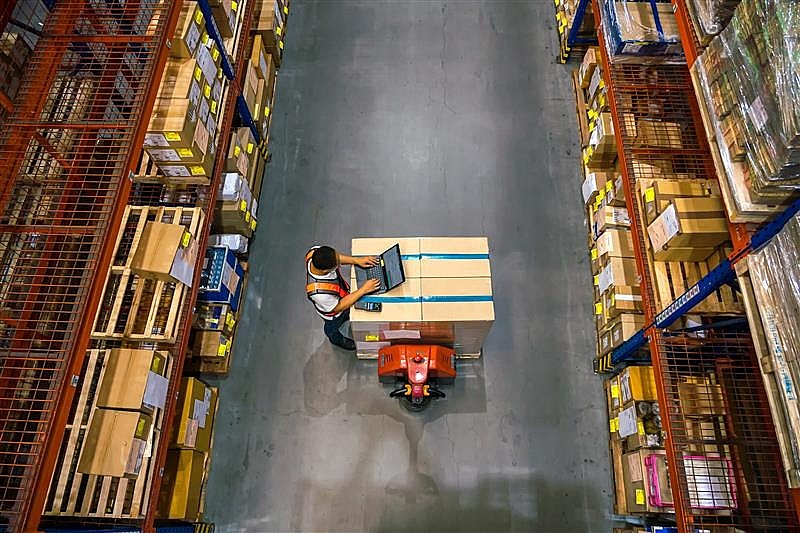
Interest in overseas expansion remains robust among Vietnamese firms, with nearly 90 per cent looking to grow beyond local borders, primarily to drive revenue and profitability. Post-tariffs, 46 per cent of businesses expect to accelerate their expansion efforts.
ASEAN continues to be the top region of interest, both in 2024 and over the next one to three years, with Thailand and Singapore emerging as preferred destinations. Beyond Asia, Europe has also gained prominence, with one in four businesses identifying it as a key market for current and future expansion.
The study highlights top barriers to overseas expansion, including finding the right business partners, limited funding or regulatory support, and a lack of market information and collaboration. Businesses are seeking support in the form of connections to large corporations that can serve as anchor clients (45 per cent), tax incentives or rebates (43 per cent), and funding and grants for market entry (41 per cent).
Supply chain management remains a top priority for 90 per cent of businesses in Vietnam, as geopolitical uncertainties continue to pose risks. The three key challenges identified include rising supply costs, disruptions to existing supply routes, and inventory management issues.
To address these concerns, Vietnamese firms are diversifying their supplier base, digitalising supply chain processes, and strengthening supplier relationships. There is also a growing emphasis on localisation, with companies sourcing and operating closer to home to improve supply chain stability. In 2024, 72 per cent of businesses sourced from domestic suppliers, 67 per cent from within ASEAN, and 43 per cent from China.
The main research for the UOB Business Outlook Study was conducted in January, surveying around 4,200 businesses across ASEAN and Greater China, including 532 from Vietnam. Following the announcement of US tariffs, a follow-up dipstick survey was conducted from April 9-12 with approximately 800 businesses.
Source: VIR
Related News

CHARITY / EXHIBITION / OTHER EVENTS
INVESTMENT OPPORTUNITIES IN CA MAU PROVINCE: 96 PROJECTS AND 20 STRATEGIC PROJECTS
We are pleased to share with you information on investment projects currently seeking investors in Ca Mau Province. Should your esteemed company or association be interested, we kindly invite you to review the project information and complete the registration form via the links provided. The Ho Chi Minh City Investment and Trade Promotion Centre (ITPC) will consolidate the expressions of interest and facilitate connections with the leadership of Ca Mau Province at a meeting tentatively scheduled for 13 November 2026 in Ho Chi Minh City.

MEMBER CORNER / PROMOTIONS
BẰNG KIỀU LIVESHOW - A SYMPHONY OF LOVE UNDER THE GOLDEN GLOW
A masterclass in live music that takes the audience on a soulful journey through immortal love songs, guided by the peerless artistry and emotive storytelling of renowned singer Bằng Kiều. The highlight of the night is his seamless musical chemistry with special guest Triệu Hồng Ngọc, promising passionate and deeply resonant duets inside the magnificent Grand Ballroom.

INFRASTRUCTURE / CONSTRUCTION / LOGISTIC / PORT
ĐÀ NẴNG GREEN-LIGHTS US$105 MILLION THAI DEVELOPMENT DEAL
The central city has approved an investment proposal by Thailand’s WHA Group to develop infrastructure for the 400ha WHA Đà Nẵng Industrial Park project on two communes of Thăng Bình and Đồng Dương, with an investment of more than VNĐ2.7 trillion (US$105 million). The city said it approved WHA Industrial Development International's status as an investor in the project, which is expected to take place between 2027 and 2034.

VIETNAM ECONOMY INVESTMENT
MOBILE PHONE EXPORTS RISE 20% TO $51.8 BILLION IN FIRST NINE MONTHS
Exports of mobile phones and components rose 20 per cent year-on-year to nearly US$51.8 billion in the first nine months of 2026, with China, the US and Republic of Korea accounting for more than half of the total. Shipments to the three markets reached a combined $26.18 billion, or 50.6 per cent of total exports of the product group during the period, according to data from the Vietnam Department of Customs under the Ministry of Finance.

INFRASTRUCTURE / CONSTRUCTION / LOGISTIC / PORT
VIỆT NAM-CAMBODIA TRADE GATHERS PACE TOWARDS $20 BILLION TARGET
Trade between Việt Nam and Cambodia continues to grow, remaining a bright spot and a key pillar of bilateral cooperation as the two countries aim to raise two-way trade to US$20 billion in the coming years. After setting a record of more than $11.3 billion last year, bilateral trade reached about $8.7 billion in the first eight months of this year, up 8.3 per cent year on year.

VIETNAM ECONOMY INVESTMENT
FRUIT AND VEGETABLE EXPORTS POISED TO HIT $10 BILLION IN 2026
Fruit and vegetable exports are on track to reach nearly US$10 billion in 2026, after rising 19.9 per cent year on year to nearly US$7.4 billion in the first nine months, driven by strong seasonal demand and abundant tropical fruit supplies. The Ministry of Agriculture and Environment said the growth reflected stronger international demand for fresh produce and processed agricultural products.
Events Sponsors






















