Want to be in the loop?
subscribe to
our notification
Business News
VIETNAMESE SHIPPING INDUSTRY ADEQUATE TO MEET RISING DEMAND: VINALINES
Việt Nam’s ports and shipping industry is more than sufficient to meet the country’s demand in import-export activities.
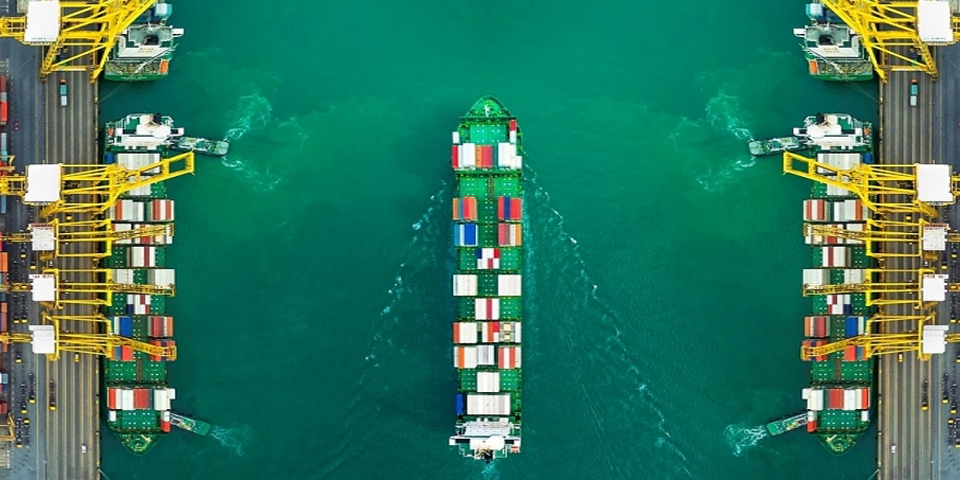
That is the response from the Vietnam National Shipping Lines (Vinalines) to a Bloomberg report claiming container shipping may need to grow at almost twice the pace of the last decade, which was reported at 10-12 per cent annually, to keep up with new, surging demand.
Bloomberg also claimed the country is facing a US$4 billion shortfall in developing its ports with no major projects nearing completion in the near future. Overcoming such an issue can prove to be a daunting task as the cases of early developers such as Japan and Korea have shown.
A high-ranking Vinalines official told the Vietnam News Agency the inauguration of deepwater port Lạch Huyện in northern port Hải Phòng City has significantly increased northern region’s shipping capacity. In the southern region, port complex Cái Mép-Thị Vải in Bà Rịa-Vũng Tàu Province is and will be able to meet with the country’s rising demand in years to come.
“Some 18 million TEU of goods - twenty-foot equivalent unit for the capacity of container ships and container terminals - passed through Vietnamese ports every year,” said the Vinalines official.
“We anticipated this figure to reach 30-40 million in 2030. By that time, the country must have a number of additional ports built in both the northern and the southern regions.”
The Vietnamese fleet which comprises 39 ships, however, only accounted for 1.2-1.3 million TEU or just over 7 per cent. Establishing new shipping lines is both extremely difficult and expensive and usually requires both extensive knowledge and financial resources, requirements that can only be met by a handful of large shipping companies.
“In order to develop our own lines and to give domestic companies incentives to invest in growing their fleets, the country must come up with a vision for the shipping industry and support policies now,” said the official.
In addition, Vietnamese shipping companies must work to improve technical capacity and join forces with alliances in the global shipping industry.
According to the Vietnam Maritime Administration, the country has more than 1,500 ships with a total capacity of 7.8 billion tonnes, ranking 4th in ASEAN and 30th in the global fleet ranking. With an average age of 15.6 years old, the Vietnamese fleet has seen rapid growth in recent years from 19 ships in 2013 to 39 ships this year.
The fleet has carried more than 81 million tonnes of goods this year, a 16 per cent increase year-on-year, meeting the demand of domestic goods transport. So far its international lines are mostly to ports in China, Japan, Korea and ASEAN countries due to modest size and limited financial capacity.
There are some 281 ports operating across the country with a total capacity of 550 million tonnes per year. Major ports in key logistics region including Hải Phòng City, Bà Rịa-Vũng Tàu and HCM City have seen a significant upgrade in infrastructure to be able to receive ships with up to 30,000 DWT (Deadweight tonnage). At the same time, central region’s ports in Đà Nẵng and Cam Ranh have seen fast-growth in recent years, according to a report on logistics by the administration.
The report, however, pointed out a number of shortcomings and limitations that have been hindering growth. As of now, Hải Phòng Port is the only one that has been connected to the national railway. Poor infrastructure on both national road and waterway system has resulted in time wasted and increased logistics cost for shipping companies.
Source: VNS
Related News

MEMBER CORNER / PROMOTIONS
HCMC | CERTIFIED SUSTAINABILITY PROFESSIONAL (CSP) TRAINING | REGISTRATION OPEN
As sustainability becomes deeply embedded in corporate strategy and supply-chain operations across Vietnam, Hong Kong Business Association Vietnam is pleased to endorse the upcoming Certified Sustainability Professional (CSP) training program by the Asia Institute for Sustainability (AIS) - a premier internationally recognized ESG credential in Vietnam.
VIETNAM ECONOMY INVESTMENT
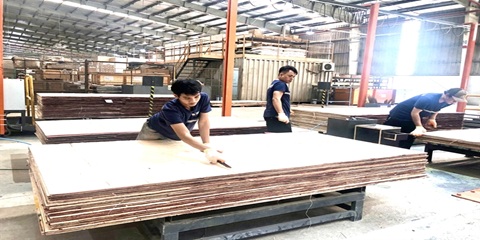
HCM CITY SAYS HOW IT PLANS TO ACHIEVE 10-11% ANNUAL EXPORT GROWTH FOR REST OF DECADE
The southern economic hub aims to strengthen its role as the country’s largest import-export centre while developing into a regional transhipment centre in Southeast Asia, supported by green and digital transformation and a circular economy. HCM City has outlined measures to expand production capacity, cut logistics costs, diversify export markets, and help businesses meet increasingly stringent international standards as it targets average annual export growth of 10-11 per cent through 2030.
VIETNAM ECONOMY INVESTMENT
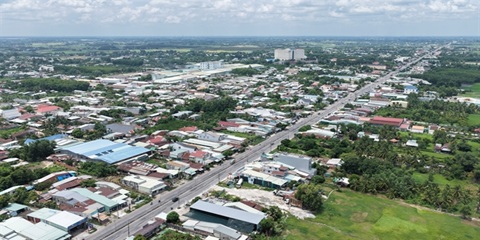
HCM CITY LEADS ECONOMIC RESTRUCTURING IN SOUTHEAST REGION
According to Associate Professor, Dr Vũ Tuấn Hưng, director of the Institute of Social Sciences of the Southern Region, the Southeast is a strategically important socio-economic space in Việt Nam’s development given its advantages in location, industry, trade, services, logistics, science and technology, urbanisation and human resources.
TECHNOLOGY
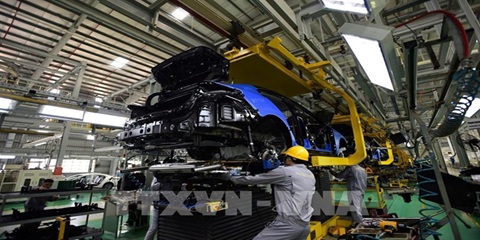
DIGITAL TRANSFORMATION TURNED INTO PRACTICAL TOOLS FOR PEOPLE, BUSINESSES
Việt Nam is moving its digital transformation agenda beyond policy frameworks and individual technology platforms towards practical applications that address everyday needs, as authorities seek measurable outcomes from science, technology and innovation. Under Politburo Resolution No. 57-NQ/TW issued on December 22, 2024, the implementation is increasingly shifting from simply completing assigned tasks towards developing concrete products and services for citizens and businesses.
TECHNOLOGY
APPLYING TECHNOLOGY FOR ECONOMIC TRANSFORMATION
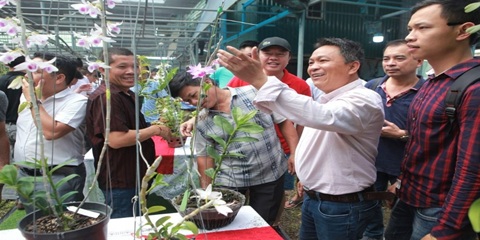
Having completed its new rural development program, Hanoi is shifting its focus toward improving development quality and building smart, sustainable rural areas. The transformation of Dong La orchid-growing village in An Khanh, a western commune of Hanoi, shows how digital technology is becoming a driver of production, market expansion, and higher incomes for local residents.

MEMBER CORNER / PROMOTIONS
VIGLACERA HONORED AS THE "LEADING GREEN INDUSTRIAL REAL ESTATE DEVELOPER 2026"
Organized by the Vietnam Investment Review, this prestigious awards program recognizes industry pioneers advancing eco-industrial parks, clean energy transition, and rigorous ESG standards. Outperforming competitors through a rigorous evaluation, Viglacera Corporation – JSC proudly ranked among the Top 5 highest-positioned enterprises in the Leading Green Industrial Real Estate Developers 2026 category, reinforcing its premier position in Vietnam’s industrial real estate sector.
Events Sponsors






















