Want to be in the loop?
subscribe to
our notification
Business News
VĨNH LONG PROVINCE EYES ECONOMIC GROWTH OF AT LEAST 8 PER CENT
Vĩnh Long Province targets economic growth of at least 8 per cent this year after an excellent first half.
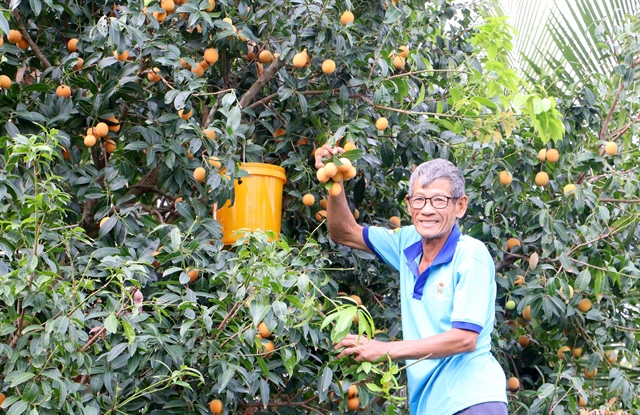
A plum mango orchard belonging to the Đông Thành Sweet Plum Mango Co-operative in Vĩnh Long Province’s Đông Thành Ward is treated to fruit off-season, achieving high yields and prices. – VNA/VNS Photo Lê Thúy Hằng
VĨNH LONG – Vĩnh Long Province targets economic growth of at least 8 per cent this year after an excellent first half.
Speaking at a recent People’s Council session, chairman of its committee, Nguyễn Minh Dũng, said: “Thanks to the strong leadership of Party committees at all levels, the decisive action of the People’s Committee and the efforts of local people and businesses, the province achieved positive socio-economic results in the first half of the year.”
The economy grew at 7.49 per cent during the period, agriculture by 2.93 per cent, industry by 12.44 per cent, and services by 8.74 per cent.
Revenues were nearly VNĐ12.2 trillion ($465 million), or 56.8 per cent of the full-year target.
The Cửu Long (Mekong) Delta province also completed its programme to eliminate makeshift and dilapidated housing, handing over new homes to 6,530 needy households.
Poverty reduction and other social welfare efforts and support for ethnic minorities were also implemented effectively.
Following the merger of Trà Vinh and Bến Tre provinces with Vĩnh Long, the province streamlined the administrative system without disruption.
It launched pilot one-stop service centres in newly established wards and communes to serve the public and businesses.
The province is restructuring various sectors, with a focus on transforming crop and livestock structures and expanding value chain models for agricultural products.
Agricultural restructuring
Vĩnh Long is accelerating comprehensive restructuring of its agriculture sector to support economic growth.
Lâm Văn Tân, director of its Department of Agriculture and Environment, said the province is targeting growth of 3.57 per cent for the agriculture, forestry and fisheries sector this year and overall economic growth of at least 8 per cent.
To achieve this goal, it would enhance restructuring towards efficiency and sustainability, and promote green, organic and circular agriculture and high-tech farming, he said.
It would develop modern, multi-value agricultural production with high productivity and competitiveness based on local advantages, he added.
In livestock farming, it aims to stabilise numbers by year-end at 560,250 head of cattle, 894,400 pigs and 25.61 million poultry birds.
It is promoting large-scale, organic and biosafe livestock farming, with supply chain linkages to ensure food safety and economic efficiency.
In aquaculture, it targets output of 531,900 tonnes in the second half of the year, including 400,000 tonnes from farming and 131,900 tonnes from catches.
Local authorities will strengthen guidance for farmers on breeding schedules and support them with managing farming areas and reducing environmental pollution.
Rice farmers are being instructed to grow the autumn-winter crop on schedule and prepare properly for the 2025–26 winter-spring crop.
The province is also expanding models under the Ministry of Agriculture and Environment’s “Sustainable Development of One Million Hectares of High-Quality, Low-Emission Rice Associated with Green Growth in the Mekong Delta by 2030” programme.
For short-term crops, it will expand farming areas suited to local conditions, rotate other crops on rice paddies, promote concentrated farming, and adopt high-tech and good agricultural practices (GAP) and organic standards.
In the case of perennial crops, the province will use high-quality, disease-resistant varieties and promote sustainable farming with tighter control over inputs.
It is strengthening partnerships with businesses to ensure product consumption and implementing coordinated pest and disease control measures, especially for fruit and coconut trees.
The province has more than 222,000ha under perennial crops, including nearly 120,000ha of coconut, accounting for about 50 per cent of the country’s total.
Tân said in recent years crop production has shifted in line with the province’s agricultural restructuring goals, with a reduction in rice cultivation and increase in fruit farming, a trend that is set to continue. — BIZHUB/VNS
Source: VNS
Related News

MEMBER CORNER / PROMOTIONS
BẰNG KIỀU LIVESHOW - A SYMPHONY OF LOVE UNDER THE GOLDEN GLOW
A masterclass in live music that takes the audience on a soulful journey through immortal love songs, guided by the peerless artistry and emotive storytelling of renowned singer Bằng Kiều. The highlight of the night is his seamless musical chemistry with special guest Triệu Hồng Ngọc, promising passionate and deeply resonant duets inside the magnificent Grand Ballroom.

INFRASTRUCTURE / CONSTRUCTION / LOGISTIC / PORT
ĐÀ NẴNG GREEN-LIGHTS US$105 MILLION THAI DEVELOPMENT DEAL
The central city has approved an investment proposal by Thailand’s WHA Group to develop infrastructure for the 400ha WHA Đà Nẵng Industrial Park project on two communes of Thăng Bình and Đồng Dương, with an investment of more than VNĐ2.7 trillion (US$105 million). The city said it approved WHA Industrial Development International's status as an investor in the project, which is expected to take place between 2027 and 2034.

VIETNAM ECONOMY INVESTMENT
MOBILE PHONE EXPORTS RISE 20% TO $51.8 BILLION IN FIRST NINE MONTHS
Exports of mobile phones and components rose 20 per cent year-on-year to nearly US$51.8 billion in the first nine months of 2026, with China, the US and Republic of Korea accounting for more than half of the total. Shipments to the three markets reached a combined $26.18 billion, or 50.6 per cent of total exports of the product group during the period, according to data from the Vietnam Department of Customs under the Ministry of Finance.

INFRASTRUCTURE / CONSTRUCTION / LOGISTIC / PORT
VIỆT NAM-CAMBODIA TRADE GATHERS PACE TOWARDS $20 BILLION TARGET
Trade between Việt Nam and Cambodia continues to grow, remaining a bright spot and a key pillar of bilateral cooperation as the two countries aim to raise two-way trade to US$20 billion in the coming years. After setting a record of more than $11.3 billion last year, bilateral trade reached about $8.7 billion in the first eight months of this year, up 8.3 per cent year on year.

VIETNAM ECONOMY INVESTMENT
FRUIT AND VEGETABLE EXPORTS POISED TO HIT $10 BILLION IN 2026
Fruit and vegetable exports are on track to reach nearly US$10 billion in 2026, after rising 19.9 per cent year on year to nearly US$7.4 billion in the first nine months, driven by strong seasonal demand and abundant tropical fruit supplies. The Ministry of Agriculture and Environment said the growth reflected stronger international demand for fresh produce and processed agricultural products.
GARMENT / TEXTILE
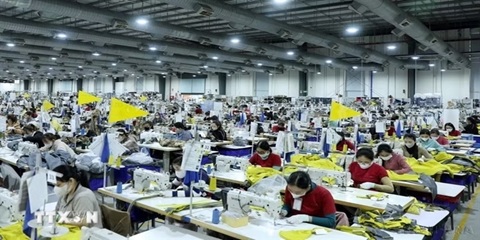
TEXTILE EXPORTS FACE DUAL CHALLENGES OF SUSTAINING ORDERS AND BOOSTING EFFICIENCY AMID GROWING COMPETITION
Data shows that the textile and garment sector maintained its growth momentum in the first nine months of this year. The industry's total export turnover reached an estimated US$35.721 billion in the first nine months of this year, up 3.3 per cent year-on-year. Despite posting encouraging export figures, Vietnamese textile and garment enterprises continue to navigate unpredictable market variables.
Events Sponsors






















