Want to be in the loop?
subscribe to
our notification
Business News
WORLD BANK PROMISES $200 BN IN 2021-25 CLIMATE CASH
The World Bank on Monday unveiled US$200 billion in climate action investment for 2021-25, adding this amounts to a doubling of its current five-year funding. The World Bank said the move, coinciding with a UN climate summit meeting of some 200 nations in Poland, represented a "significantly ramped up ambition" to tackle climate change, "sending an important signal to the wider global community to do the same."
Developed countries are committed to lifting combined annual public and private spending to $100 billion in developing countries by 2020 to fight the impact of climate change – up from 48.5 billion in 2016 and 56.7 billion last year, according to latest OECD data.
Southern hemisphere countries fighting the impact of warming temperatures are nonetheless pushing northern counterparts for firmer commitments.
In a statement, the World Bank said the breakdown of the $200 billion would comprise "approximately $100 billion in direct finance from the World Bank."
Around one third of the remaining funding will come from two World Bank Group agencies with the rest private capital "mobilised by the World Bank Group."
"If we don’t reduce emissions and build adaptation now, we’ll have 100 million more people living in poverty by 2030," John Roome, World Bank senior director for climate change, warned.
"And we also know that the less we address this issue proactively just in three regions – Africa, South Asia and Latin America – we’ll have 133 million climate migrants," Roome said.
’Fight the causes’
The bank’s financing package amounts to "about 40 billion a year, but the direct (finance) is 27 billion per year on average," Roome said.
He added that in the 2018 fiscal year, running from July 2017 to June this year, the World Bank had committed $20.5 billion to climate action, compared with an annual average of $13.5 billion for the 2014-18 period.
Roome said the money now being earmarked amounted to "about 35 per cent" of the World Bank Group’s total financing.
Much of the climate action financing is being set aside for reducing greenhouse gas emissions, notably through development of renewable energy strategies.
However, the World Bank stated that "a key priority is boosting support for climate adaptation," given the millions of people already battling the consequences of extreme weather.
"By ramping up direct adaptation finance to reach around $50 billion over (fiscal) 21-25, the World Bank will, for the first time, give this equal emphasis alongside investments that reduce emissions," the bank stated.
Given the urgency to act in the face of sea level rise, flooding and drought "we must fight the causes, but also adapt to the consequences that are often most dramatic for the world’s poorest people," said World Bank CEO Kristalina Georgieva.
By stepping up financial aid to developing countries worst affected, Georgieva said the bank was committed to adapting infrastructure while investing in "climate smart agriculture, sustainable water management and responsive social safety nets" as well as early response networks.
"Even if we can keep global warming down to 2 degrees Celsius we know you’re gonna need a significant amount of adaptation in places like Chad, Mozambique or Bangladesh," said Roome.
The countries whose representatives are meeting at the UN climate summit which opened Sunday in the Polish city of Katowice are seeking to make good on commitments made in the 2015 Paris climate accord.
That agreement saw countries commit to limiting global temperature rises to well below two degrees Celsius (3.6 degrees Fahrenheit), and to the safer cap of 1.5C if at all possible.
Source: VNS
Related News

TECHNOLOGY
TECH SECTOR GROWTH OPENS UP OPPORTUNITIES FOR VIỆT NAM TO GO GLOBAL
The growth of the electronics, semiconductor and high-tech sectors worldwide is opening up a variety of opportunities for Vietnamese enterprises to integrate more deeply into the global supply chain. However, to become suppliers for these corporations, domestic enterprises must meet rigorous standards regarding quality, technology, productivity and order fulfilment capabilities.
PROPERTY / INDUSTRIAL ZONE
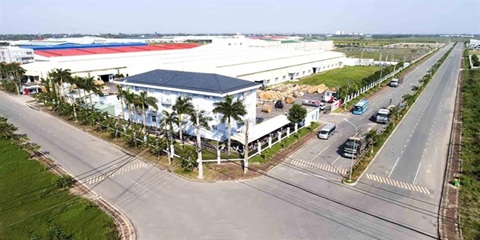
HCM CITY ATTRACTS US$5.7 BILLION INTO EXPORT PROCESSING AND INDUSTRIAL ZONES
HCM City attracted US$5.7 billion in domestic and foreign investment into its export processing and industrial zones during the first nine months of 2026. The figure exceeded the city's full-year target by 31 per cent, highlighting strong momentum in high-quality industrial investment under Resolution No.10-NQ/TW. Total investment reached 131 per cent of the 2026 target of $4.25 billion and represented a 29 per cent increase compared with the same period in 2025, according to the city's Export Processing and Industrial Zones Authority (HEPZA).
BANKING / FINANCE / INSURANCE / TAX
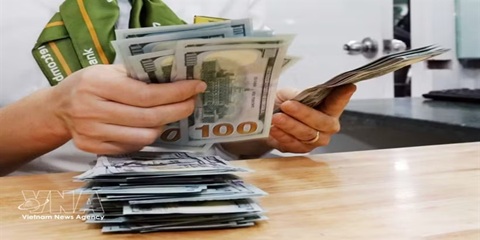
REMITTANCES TO HCM CITY RISE NEARLY 40% IN Q3
Remittances to HCM City reached more than US$2.83 billion in the third quarter of this year, up 39.5 per cent from the previous quarter and 3.6 per cent year-on-year. This was the first quarter showing positive annual growth this year, helping narrow the decline in remittance inflows over the first nine months. According to the State Bank of Vietnam (SBV)’s Regional Branch 2, remittances transferred to HCM City through credit institutions and economic organisations totalled $2.835 billion in Q3, an increase of more than $802 million from the previous quarter.
VIETNAM ECONOMY INVESTMENT
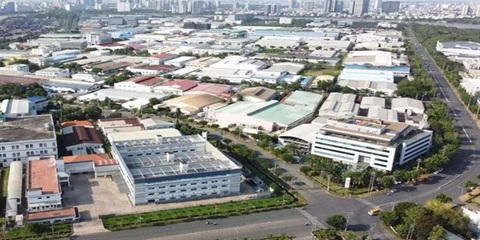
HCM CITY ADDRESSES MANUFACTURING, LAND HURDLES FOR Q4 GROWTH PUSH
HCM City is adjusting growth scenarios for lagging sectors and removing key bottlenecks in manufacturing and industrial land pricing to achieve a 13.23 per cent expansion in the fourth quarter of 2026. This sharp fourth-quarter acceleration is required to secure the city's full-year double-digit targets, following a 9.06 per cent GRDP growth recorded in the first nine months.
VIETNAM ECONOMY INVESTMENT
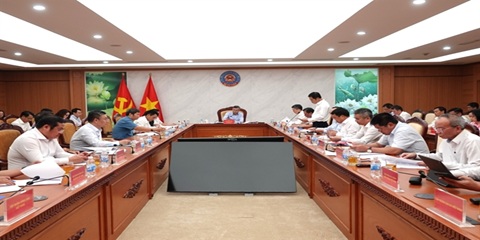
MOF'S FIRMS REPORT STRONG GROWTH IN NINE-MONTH
State-owned groups and corporations represented by the Ministry of Finance (MoF) recorded combined revenue of more than VNĐ2 quadrillion (US$79.5 billion) in the first nine months of 2026, up 28.7 per cent year-on-year, while consolidated profit before tax reached nearly VNĐ160 trillion, equivalent to 140.3 per cent of the full-year target.
VIETNAM ECONOMY INVESTMENT
SME REVENUE THRESHOLD PROPOSED TO BE RAISED TO $15.2 MILLION
The government has proposed raising the annual revenue threshold for classifying small- and medium-sized enterprises (SMEs) to VNĐ400 billion (US$15.2 million), from currently VNĐ300 billion, as part of a draft law on the development of SMEs. Minister of Finance Ngô Văn Tuấn presented the draft law, which is intended to replace the Law on Supporting SMEs 2017, to the National Assembly at a meeting late last week.
Events Sponsors






















