Want to be in the loop?
subscribe to
our notification
Business News
TURNING SEAFOOD BY-PRODUCTS INTO BILLION-DOLLAR INDUSTRY
Việt Nam, a top seafood exporter, is turning by-products into high-value goods to boost sustainability, profits, and the circular economy.
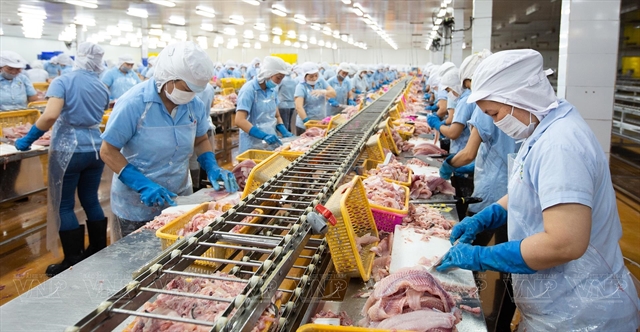
Inside Navico’s pangasius factory in Việt Nam. Experts said turning by-products into resources requires treating them as a strategic industry rather than leaving it to the spontaneous market. — VNA/VNS Photo
HCM CITY — Việt Nam, one of the world’s leading producers and exporters of seafood, is exploring ways to transform seafood by-products into value-added products, boosting the sustainability and profitability of the sector while contributing to a circular economy.
In HCM City, several enterprises have successfully tapped into this potential. Nguyễn Thành Lộc, director of Phuc Loc Co Ltd, in Tân Hải ward, said the company purchased about 60 tonnes of by-products daily from fishing vessels and factories to produce 4,000–5,000 tonnes of fishmeal annually, generating revenues of VNĐ72–90 billion (US$3–3.9 million).
“With additional capital and technology, we could increase protein content to 64 per cent and reduce imports by 140,000 tonnes of fishmeal each year,” he added.
Meanwhile, Tu Hai Co Ltd in Phước Thắng ward has begun exporting cleaned and dried fish bones to Japan at $10 per kilogram, yielding VNĐ10–12 billion annually.
“Demand is high, but supply is limited. It looks like the beginning of a promising new business,” said Đào Quốc Tuần, CEO of Tu Hai Co Ltd.
On a larger scale, the Southern Research Institute for Marine Fisheries utilises mixed crab species to produce canned crab paste and chitosan powder – a raw material for healthcare and agriculture – which is sold at up to $1,000 per kilogram.
Beyond industrial applications, seafood by-products are being transformed into artistic tourist souvenirs. Restaurants and processing facilities generate tonnes of shells nightly.
Hai Lan Co Ltd in Bà Rịa ward collects and recycles shells into souvenirs, artwork and jewellery, with items selling for between VNĐ40,000 and VNĐ20 million each.
Recently, the company reportedly signed a memorandum of understanding with OSB Investment and Technology JSC – Alibaba’s authorised agent in Việt Nam – to market its shell-based products on Alibaba’s e-commerce platform, expanding their global reach.
Environmental awareness and creativity are also inspiring young people. Nguyễn Lê Minh Châu, a student at Vũng Tàu High School, submitted a model “Workshop for Handmade Shell Products in a Beach-themed Coffee Shop” to the Bà Rịa–Vũng Tàu Seafood Innovation Contest. The concept allows visitors to create their own shell-based items in a workshop setting while enjoying drinks in a space decorated with appealing shells.
Support in policy, capital and technology
According to forecasts from the agriculture and environment sector, in the coming years, shrimp heads alone could provide around 490,000 tonnes of food products, while pangasius offcuts and stomachs could provide 100,000 tonnes, and fish oil could provide 150,000 tonnes.
Shrimp shells could yield 146,000 tonnes of animal feed, while fish heads, bones and entrails could supply another 900,000 tonnes annually.
Other by-products – such as shrimp shells and fish skin or swim bladders – could be processed into high-value items for pharmaceuticals, cosmetics and other industries.
By 2030, shrimp by-products are projected to reach 650,000 tonnes, worth $80–100 million, and pangasius 1.3 million tonnes, valued at over $500 million.
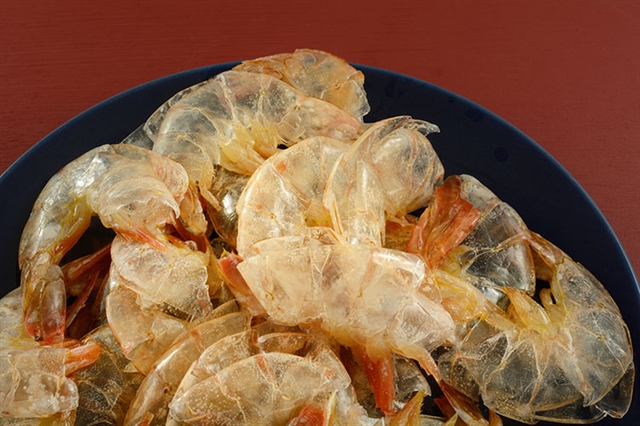
Shrimp by-products. By 2030, shrimp by-products are projected to reach 650,000 tonnes, worth $80–100 million. — Photo giongthuysannghean.gov.vn
Phạm Thị Na, deputy director of the HCM City Department of Agriculture and Environment, noted that processing by-products could generate tens of thousands of jobs, enhance Việt Nam’s seafood reputation, and ease pressure on the environment due to food processing waste.
Phạm Quốc Huy, director of the Southern Research Institute for Marine Fisheries, emphasised that turning by-products into resources would require treating them as a strategic industry rather than leaving it to the spontaneous market.
Beyond fishmeal and fish oil, global trends now include extracting peptides and enzymes, and producing biodegradable materials and packaging from shrimp shells and fish skin.
Supportive policies, green financing, and stronger collaboration among businesses, scientists, and authorities could turn seafood waste into “blue gold”, boosting Việt Nam’s marine economy, protecting oceans and raising the global profile of its seafood industry.
Currently, seafood by-products – mainly shrimp shells, crab shells, fish skin, bones and organs – amount to around one million tonnes per year, with over 90 per cent in solid form. Improper disposal can lead to environmental pollution, especially in tropical regions.
Currently, the processing value of these by-products is approximately $275 million per year, significantly lower than the estimated potential of $4-5 billion. — VNA/VNS
Source: VNS
Related News

INFRASTRUCTURE / CONSTRUCTION / LOGISTIC / PORT
VIỆT NAM-CAMBODIA TRADE GATHERS PACE TOWARDS $20 BILLION TARGET
Trade between Việt Nam and Cambodia continues to grow, remaining a bright spot and a key pillar of bilateral cooperation as the two countries aim to raise two-way trade to US$20 billion in the coming years. After setting a record of more than $11.3 billion last year, bilateral trade reached about $8.7 billion in the first eight months of this year, up 8.3 per cent year on year.
TECHNOLOGY
AI BEGINNING TO RESHAPE RECRUITMENT CRITERIA
Digital literacy is the only capability area in which fresh graduates meet employers’ expectations, according to a new report. Yet, it is also the standard rising fastest, as businesses increasingly expect new hires to use AI effectively in the workplace. Some 83 per cent of employers say AI has changed, or is beginning to change, their hiring criteria, while 94 per cent report higher expectations for digital and AI capabilities than they had two to three years ago.
INFRASTRUCTURE / CONSTRUCTION / LOGISTIC / PORT
ĐÀ NẴNG GREEN-LIGHTS US$105 MILLION THAI DEVELOPMENT DEAL
The central city has approved an investment proposal by Thailand’s WHA Group to develop infrastructure for the 400ha WHA Đà Nẵng Industrial Park project on two communes of Thăng Bình and Đồng Dương, with an investment of more than VNĐ2.7 trillion (US$105 million). The city said it approved WHA Industrial Development International's status as an investor in the project, which is expected to take place between 2027 and 2034.
VIETNAM ECONOMY INVESTMENT
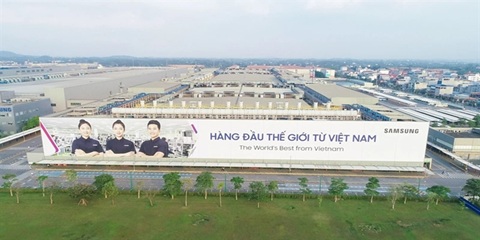
MOBILE PHONE EXPORTS RISE 20% TO $51.8 BILLION IN FIRST NINE MONTHS
Exports of mobile phones and components rose 20 per cent year-on-year to nearly US$51.8 billion in the first nine months of 2026, with China, the US and Republic of Korea accounting for more than half of the total. Shipments to the three markets reached a combined $26.18 billion, or 50.6 per cent of total exports of the product group during the period, according to data from the Vietnam Department of Customs under the Ministry of Finance.
VIETNAM ECONOMY INVESTMENT
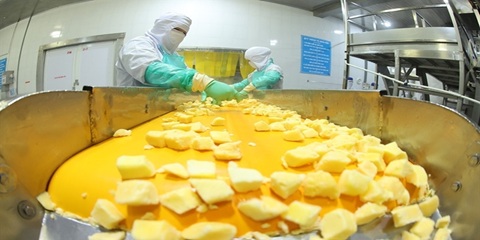
FRUIT AND VEGETABLE EXPORTS POISED TO HIT $10 BILLION IN 2026
Fruit and vegetable exports are on track to reach nearly US$10 billion in 2026, after rising 19.9 per cent year on year to nearly US$7.4 billion in the first nine months, driven by strong seasonal demand and abundant tropical fruit supplies. The Ministry of Agriculture and Environment said the growth reflected stronger international demand for fresh produce and processed agricultural products.
GARMENT / TEXTILE
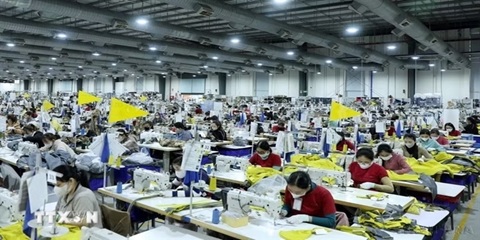
TEXTILE EXPORTS FACE DUAL CHALLENGES OF SUSTAINING ORDERS AND BOOSTING EFFICIENCY AMID GROWING COMPETITION
Data shows that the textile and garment sector maintained its growth momentum in the first nine months of this year. The industry's total export turnover reached an estimated US$35.721 billion in the first nine months of this year, up 3.3 per cent year-on-year. Despite posting encouraging export figures, Vietnamese textile and garment enterprises continue to navigate unpredictable market variables.
Events Sponsors






















