Want to be in the loop?
subscribe to
our notification
Business News
WAGE DISPUTES OVERHEATED
Vietnam General Confederation of Labour, which represents workers, called a halt to the meeting. Earlier, on August 4, the Vietnam Chamber of Commerce and Industry (VCCI) requested an end to the meeting to express its uncompromising attitude to the proposed rise in minimum wage suggested by the worker representative. Each party already used its right to call a halt to the meeting according to the operating regulations of the National Wages Council.
Justification of wage
Currently, the recommended rise in minimum wages by VCCI and Vietnam General Confederation of Labour is by far different. Mr Mai Duc Chinh, Vice President of the Vietnam General Confederation of Labour, affirmed that the confederation would not change its proposed rise in minimum wage of 16.8 percent or more for 2016 from the rate in 2015. Meanwhile, VCCI, which represents employers, insisted on the proposed increase of 10 percent.
The Vietnam General Confederation of Labour defended that the current minimum wage can meet only 74 percent of minimum livelihood of a worker. The proposed rise above is based on minimum demand of worker and their families, socioeconomic conditions, salaries on labour market, and inflation compensations. Mr Chinh stressed that the rate proposed by the Vietnam General Confederation of Labour is reasonable to the roadmap that minimum wages must be enough for minimum livelihoods of workers and their families in 2017.
VCCI and the Association of Foreign Investment Enterprises in Vietnam (VAFIE) insisted on the addition of VND150,000-250,000 to minimum wages, depending on regions, which are tantamount to a 10-11 percent increase. This proposal takes the affordability of enterprises into account.
In the meantime, the economy is still in difficulty; global economies are unpredictably volatile; financial markets are being restructured; access to capital sources has not been widened for enterprises; and many companies are struggling to survive. The ‘wage’ shock may add burdens on enterprises which seem to be excessive. According to VCCI's statistics, big businesses account for less than 2 percent, medium enterprises make up for 2 percent; and small and micro businesses account for 96 percent. And, almost 70 percent of enterprises do not make a profit.
Currently, the costs employers pay for social insurance, medical insurance, unemployment insurance and union fee in Vietnam are the highest in the region. With the hike in minimum wages in 2015, insurance premiums and union dues increased 35 percent over 2014. The rise in minimum wages resulted in increased payments for these items. This was actually a heavy burden for businesses, especially SMEs. Ensuring rights for workers is a right policy, but it is more important to take the competitiveness and development of enterprises into consideration.
Wage rise is based on labour productivity growth
Whether the final rise is inclined to the proposed rate of 16.8 percent by the worker representative or to 10 percent as recommended by the employer representative or a rate of the National Wages Council that soothes both parties after two unsuccessful meetings, the story of minimum wages is still very complicated for following dialogues.
It is true that a vast majority of wage earners are leading a hard life or even live a poor life, but the wage must be viewed in a broader perspective based on the correlation with labour productivity and affordability of enterprises. In 2015 and beyond, Vietnam will have to face numerous challenges, including pressures from the entry to the ASEAN Economic Community (AEC), because it has to fulfil its international integration commitments. The "health" of enterprises remains limited, particularly SMEs.
In recent years, though the economy grew rapidly, it was driven by the exploitation of natural resources, cheap labour and pure investments. The shift of growth model to a new pattern based on intensive investment, innovation, scientific and technological application and labour productivity will require a lot of time and effort to be completed.
Another reason for holding back the wage rise is Vietnam’s labour productivity is the lowest in the region. According to data from the International Labour Organisation (ILO), Vietnam’s labour productivity in 2013 was among the lowest in the Asia - Pacific region, lower than Singapore, Japan and South Korea by 15 times, 11 times and 10 times, respectively. In ASEAN, Vietnam’s labour productivity was only equal to a fifth of Malaysia and two fifths of Thailand.
And, the most important factor to the proposed low rise is wages are regulated by the so-called market mechanism. Unemployment and underemployment often lead to supply-demand imbalance, causing wages to gain slowly or stay unchanged.
The salary and income rise for workers is still a hard nut to crack when it is placed in correlation with the above issues. In this regard, Mr Phillip Hazelton, Chief Advisor for ILO - Vietnam Labour Relations Project, said that the adjustment of minimum wages should be made regularly and based on both social and economic factors, e.g. the needs of workers and their families, the cost of living, the affordability of enterprises, labour productivity growth, and the correlation of minimum wage to average wage as well as employment desires.
ILO recommended that National Wages Council build a consensus between trade unions and employers via dialogues and conduct additional negotiation sessions for concerned parties to have enough time to reconsider proposals from counterparts.
Mr Pham Minh Huan, Chairman of the National Wages Council, said, the council will summon the third and last meeting on the minimum wage hike for 2016, slated for September 3, 2015. If this meeting ends without any agreement, the Chairman of the National Wages Council will propose a rate and submit to the Government for approval. The adopted rate will be applied from January 1, 2016.
Source: VCCI
Related News

INFRASTRUCTURE / CONSTRUCTION / LOGISTIC / PORT
VIỆT NAM-CAMBODIA TRADE GATHERS PACE TOWARDS $20 BILLION TARGET
Trade between Việt Nam and Cambodia continues to grow, remaining a bright spot and a key pillar of bilateral cooperation as the two countries aim to raise two-way trade to US$20 billion in the coming years. After setting a record of more than $11.3 billion last year, bilateral trade reached about $8.7 billion in the first eight months of this year, up 8.3 per cent year on year.
TECHNOLOGY
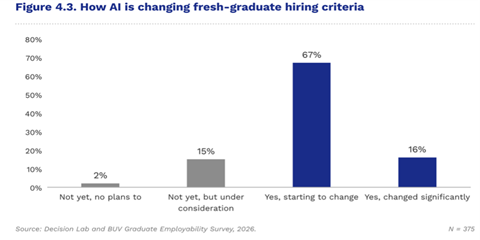
AI BEGINNING TO RESHAPE RECRUITMENT CRITERIA
Digital literacy is the only capability area in which fresh graduates meet employers’ expectations, according to a new report. Yet, it is also the standard rising fastest, as businesses increasingly expect new hires to use AI effectively in the workplace. Some 83 per cent of employers say AI has changed, or is beginning to change, their hiring criteria, while 94 per cent report higher expectations for digital and AI capabilities than they had two to three years ago.
INFRASTRUCTURE / CONSTRUCTION / LOGISTIC / PORT
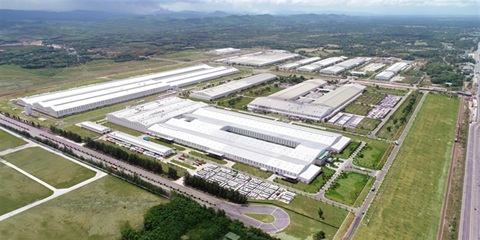
ĐÀ NẴNG GREEN-LIGHTS US$105 MILLION THAI DEVELOPMENT DEAL
The central city has approved an investment proposal by Thailand’s WHA Group to develop infrastructure for the 400ha WHA Đà Nẵng Industrial Park project on two communes of Thăng Bình and Đồng Dương, with an investment of more than VNĐ2.7 trillion (US$105 million). The city said it approved WHA Industrial Development International's status as an investor in the project, which is expected to take place between 2027 and 2034.
VIETNAM ECONOMY INVESTMENT
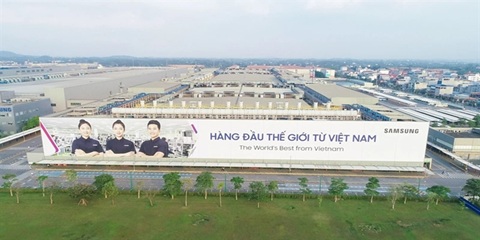
MOBILE PHONE EXPORTS RISE 20% TO $51.8 BILLION IN FIRST NINE MONTHS
Exports of mobile phones and components rose 20 per cent year-on-year to nearly US$51.8 billion in the first nine months of 2026, with China, the US and Republic of Korea accounting for more than half of the total. Shipments to the three markets reached a combined $26.18 billion, or 50.6 per cent of total exports of the product group during the period, according to data from the Vietnam Department of Customs under the Ministry of Finance.
VIETNAM ECONOMY INVESTMENT
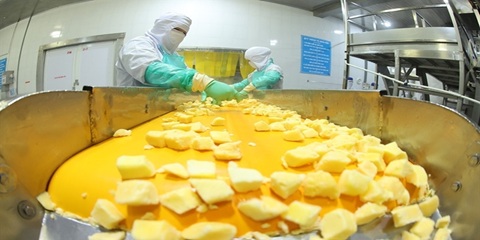
FRUIT AND VEGETABLE EXPORTS POISED TO HIT $10 BILLION IN 2026
Fruit and vegetable exports are on track to reach nearly US$10 billion in 2026, after rising 19.9 per cent year on year to nearly US$7.4 billion in the first nine months, driven by strong seasonal demand and abundant tropical fruit supplies. The Ministry of Agriculture and Environment said the growth reflected stronger international demand for fresh produce and processed agricultural products.
GARMENT / TEXTILE
TEXTILE EXPORTS FACE DUAL CHALLENGES OF SUSTAINING ORDERS AND BOOSTING EFFICIENCY AMID GROWING COMPETITION
Data shows that the textile and garment sector maintained its growth momentum in the first nine months of this year. The industry's total export turnover reached an estimated US$35.721 billion in the first nine months of this year, up 3.3 per cent year-on-year. Despite posting encouraging export figures, Vietnamese textile and garment enterprises continue to navigate unpredictable market variables.
Events Sponsors






















